

Hey there! I'm a supplier of inverters for water pumps, and today I wanna chat about how these nifty devices control the speed of water pumps. It's a topic that's super important for anyone dealing with water systems, whether it's for a small home setup or a big industrial project.
First off, let's understand what an inverter for a water pump is. Simply put, it's a device that converts direct current (DC) to alternating current (AC) and can adjust the frequency and voltage of the AC power supplied to the water pump. This ability to adjust the power is what allows it to control the pump's speed.
How It Works: The Basics
The heart of an inverter is the power electronics part. It uses semiconductor devices like insulated-gate bipolar transistors (IGBTs) to switch the DC power on and off really fast. By controlling the timing and duration of these switches, the inverter can create an AC output with a variable frequency and voltage.
When it comes to a water pump, the speed of the pump motor is directly related to the frequency of the AC power it receives. According to the motor speed formula, the synchronous speed of an AC motor (Ns) is given by:
Ns = 120f / p
where f is the frequency of the AC power in hertz (Hz) and p is the number of poles in the motor. So, by changing the frequency f, the inverter can change the speed of the pump motor.
For example, if a pump motor has 4 poles (p = 4), at a standard frequency of 60 Hz, the synchronous speed would be:
Ns = 120 * 60 / 4 = 1800 revolutions per minute (RPM)
If the inverter reduces the frequency to 30 Hz, the new synchronous speed would be:
Ns = 120 * 30 / 4 = 900 RPM
This shows how a simple change in frequency can significantly alter the pump's speed.
Variable Frequency Drive (VFD) Functionality
Most inverters for water pumps work as variable frequency drives (VFDs). A VFD has several key components that work together to control the pump speed.
Rectifier
The rectifier is the first stage of the VFD. It takes the incoming AC power and converts it into DC power. This is usually done using diodes or thyristors. The DC power is then stored in a capacitor bank, which helps to smooth out any fluctuations in the power.
Inverter Section
This is where the magic happens. As mentioned earlier, the inverter section uses IGBTs to switch the DC power on and off to create the variable frequency AC output. The control circuit in the VFD determines the switching pattern of the IGBTs based on the desired pump speed.
Control Circuit
The control circuit is like the brain of the VFD. It receives input signals from various sources, such as pressure sensors, flow meters, or a user interface. Based on these signals, it calculates the required frequency and voltage for the pump to achieve the desired speed.
For instance, if a pressure sensor in a water supply system detects that the water pressure is too low, it sends a signal to the control circuit of the VFD. The control circuit then increases the frequency of the AC power supplied to the pump, which in turn increases the pump speed and boosts the water pressure.
Benefits of Speed Control
Controlling the speed of a water pump using an inverter has several benefits.
Energy Efficiency
One of the biggest advantages is energy savings. Most water pumps are designed to operate at a fixed speed, which means they consume a constant amount of energy even when the water demand is low. By using an inverter to adjust the pump speed according to the actual demand, the energy consumption can be significantly reduced.
For example, in a domestic water supply system, the water demand varies throughout the day. During the night, when the water usage is low, the pump can run at a lower speed, consuming less energy. This can lead to substantial cost savings over time.
Extended Pump Lifespan
Running a pump at a lower speed reduces the wear and tear on the pump components, such as the impeller, bearings, and seals. This can extend the lifespan of the pump and reduce the need for frequent maintenance and replacement.

Better System Performance
Speed control allows for more precise control of the water flow and pressure in the system. This can improve the overall performance of the water supply system, ensuring a consistent and reliable water supply.
Types of Inverters for Water Pumps
As a supplier, I offer a variety of inverters for water pumps to meet different needs.
Domestic Water Pump Inverter
These inverters are designed for small-scale water systems in homes and apartments. They are usually compact and easy to install. They can provide reliable speed control for domestic water pumps, ensuring a steady water supply for daily use.
Box Type Inverter for Water Pump
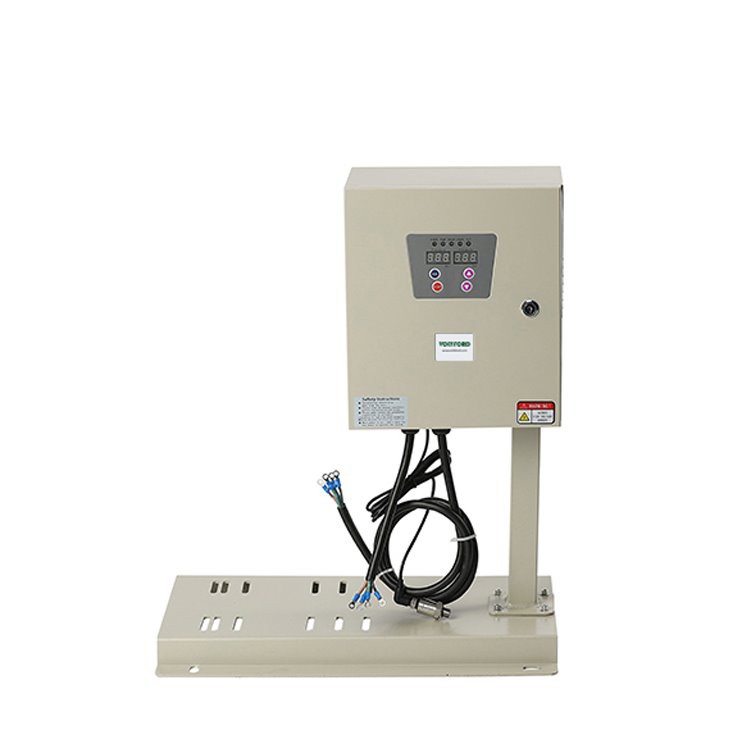
Box type inverters are more suitable for industrial and commercial applications. They are often more robust and can handle higher power loads. They come in a protective enclosure, which makes them suitable for use in harsh environments.
110V Water Pump Inverter
These inverters are specifically designed to work with 110V power supplies. They are ideal for use in regions where the standard power supply is 110V or for applications where a lower voltage is required.
Contact for Purchase
If you're in the market for an inverter for your water pump, I'd love to hear from you. Whether you're a homeowner looking to upgrade your domestic water system or an industrial client in need of a high-power solution, I can provide you with the right inverter at a competitive price. Contact me to start a discussion about your specific requirements and let's find the perfect inverter for your water pump together.
References
- "Electric Motors and Drives: Fundamentals, Types, and Applications" by Austin Hughes
- "Pump Handbook" by Igor Karassik