

Company Profile
Ningbo Volyford Import & Export Co., Ltd. is an export-oriented company mainly engaged in production and sales, now focusing on water pumps, inverters, variable frequency pumps, permanent magnet variable frequency pumps, variable frequency fishery machinery, pump controllers, pressure transmitters, garden tools, sanitary ware, massage and fitness appliances, pet products, electronic components and other industries. The factory is located in Ningbo, China. Our factory has passed ISO9001 quality system certification, and many products have passed TUV,CE, ROHS, etc. Welcome new and old customers to contact us, thanks!
Why choose us?
01/
Expertise and experience
We have a team of professionals who have many years of experience and are experts in their respective fields.
02/
Quality products and services
We offer high-quality products and services that meet our clients' needs.
03/
Competitive pricing
We offer our products and services at affordable and competitive prices.
04/
Personalized service
We provide personalized services tailored to meet our clients' unique needs, ensuring a positive experience.
05/
Timely delivery
We understand the importance of meeting deadlines and ensure that our products and services are delivered on time.
06/
Excellent customer support
We have a friendly and knowledgeable customer support team that is available to answer any questions or concerns.
07/
Innovative solutions
We continually innovate and develop new solutions to meet our clients' changing needs.
08/
Trust and reliability
We have a proven track record of delivering high-quality products and services, building trust and reliability with our client base.
-

CD60 Starter Capacitor
Aluminum shell/ bakelite/ plastic/ ABS shell and double pins, lead cable. Small volume, large Add to Inquiry -
CBB61 AC Motor Starting Capacitor
Executive standard: GB/T3667.1-2005/ IEC60252-1:2001. Climate type: 25/70/21. Capacity Deviation: Add to Inquiry -
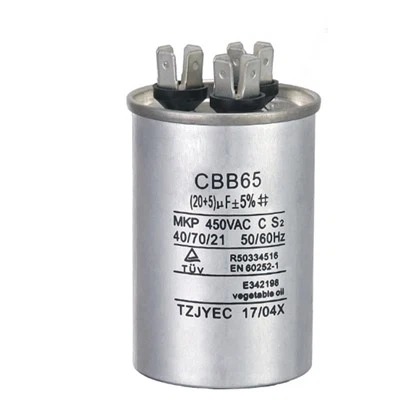
CBB65 AC Motor Capacitor
Climate type: 40/70/21. Capacity Deviation: 土5%. Insulation Resistance: ≥3000MΩ.μF. Loss Tangent: Add to Inquiry



What is Electronic Components?
Electronic components are parts or elements that are used to form electronic circuits. These components have varying functions, such as resisting an electric current, converting one form of energy to another, or amplifying a signal. Some examples of electronic components include resistors, capacitors, transistors, diodes, and integrated circuits. These components are widely used in electronic devices such as computers, smartphones, televisions, and many more.
Benefits of Electronic Components
1

Increased efficiency
Electronic components are specifically designed to work efficiently with very low energy consumption and are able to perform a multitude of tasks at a very fast pace. Consequently, it increases the overall efficiency of the system.
2
Improved accuracy
Electronic components have been designed to give accurate results. They have a very low margin of error in comparison to their mechanical counterparts.
3
Enhanced reliability and durability
Electronic components are designed to last for a long time and usually don't wear out as compared to their mechanical counterparts. Electronic components are also less prone to environmental factors such as humidity, extreme heat or cold, and vibrations.
4
Reduced size and weight
Electronic components are significantly smaller and lighter, making them easier to integrate into devices and machines without adding extra unwanted weight.
5
Cost-effective
Electronic components can combine different functions, resulting in a reduction in the number of components needed to accomplish a job. This leads to a more streamlined production process.
6
Multifunctionality
Electronic components can combine different functions, resulting in a reduction in the number of components needed to accomplish a job. This leads to a more streamlined production process..
7
Better communication
Electronic components facilitate better communication through wireless technologies, connecting devices over longer distances, and sending large amounts of data in real-time.
8
Enhanced safety
Electronic components contain fewer moving parts, reducing the likelihood of inherent dangers or hazards. Additionally, electronic components can use self-regulated safety features such as temperature sensors to prevent overheating and prevent malfunction.
Types of Electronic Components
Resistors
A resistor is an electrical component that restricts the flow of current in an electrical circuit.
Capacitors
A capacitor is an electronic component used to store electric charge.
Inductors
An inductor is a passive electrical component that stores energy in a magnetic field when electric current flows through it.
Diodes
A diode is an electronic component that allows current to flow in only one direction.
Transistors
A transistor is an electronic component used in amplification and switching circuits. It allows a small voltage to control a larger voltage or current.
Integrated Circuits (ICs)
An IC is a single electronic component that contains multiple circuit elements such as transistors, resistors, and capacitors on a single chip.
Microcontrollers
A microcontroller is a small computer on a single integrated circuit that is used to control electronic devices.
Sensors
A sensor is an electronic component that detects and responds to physical changes in its environment, such as temperature and light.
OLED displays
An OLED display is a type of organic light-emitting diode display that uses organic materials to create light. It is used in applications like smartphones, televisions, and computer monitors.
Memory devices
Memory devices are electronic components that store information. They include RAM, ROM, and flash memory.
Application of Electronic Components

Consumer electronics
Electronic components are found heavily in consumer electronics such as smartphones, laptops, televisions, gaming consoles, and more. Some common electronic components in these devices include resistors, capacitors, diodes, transistors, and integrated circuits.
Automotive industry
Electronic components have become essential in modern automobiles. These components help in improving safety, controlling emissions, and increasing fuel efficiency. Common electronic components used in the automotive industry include sensors, microcontrollers, and computer chips.
Aerospace industry
Electronic components are also used extensively in the aerospace industry. They are used in spacecraft and airplanes for navigation, communication, and control systems.
Medical industry
Electronic components play a significant role in the medical industry, especially in the development of medical equipment. Electronic components used in medical devices include sensors, microcontrollers, and processors.
Industrial automation
Electronic components are used in industrial automation to control machinery and processes. This includes sensors, actuators, and programmable logic controllers (PLCs).
Energy industry
Electronic components are used in the energy industry for monitoring and controlling energy production and distribution. This includes automation systems, sensors, and control systems.
Components of Electronic Components
Some of the most commonly used electronic components are resistors, capacitors, inductors, diodes, LEDs, transistors, crystals and oscillators, electromechanical components like relays and switches, ICs, and connectors.

How to Maintain Electronic Components?
Handle with care
Electronic components are fragile and can be easily damaged by rough handling. Always handle them gently.
Store properly
Store electronic components in a dry, cool, and dust-free environment. Keep them away from direct sunlight and moisture.
Clean regularly
Dust and debris can damage electronic components over time. Clean your electronic components regularly with a soft brush or compressed air.
Avoid static electricity
Static electricity can damage electronic components. When handling electronic components, wear an anti-static wristband or touch a grounded object before touching the components.
Use proper tools
Use the proper tools when working on electronic components. Working with the wrong tool can damage the components.
Check for damage
Inspect electronic components before and after use. Look for any signs of damage or wear and replace damaged components.
Follow the manufacturer’s instructions
Always follow the manufacturer’s instructions when installing or using electronic components.
Avoid overheating
Overheating can damage electronic components. Make sure the components are not exposed to excessive heat.
Material of Electronic Components
Electronic components are the building blocks of any electronic device. They are made up of various materials that have unique properties and characteristics. These properties determine the performance of the electronic components and ultimately the performance of the device they are used in.
Here are the different materials used in electronic components:
Semiconductors: They are materials that have properties between those of conductors and insulators. They are the key components in electronic devices and include silicon, germanium, and gallium arsenide.
Conductors: As the name implies, they are materials that conduct electricity. They are used in electronic devices to connect different components and provide pathways for electrical current. Copper, silver, and gold are commonly used conductors.
Insulators: They are materials that resist the flow of electricity. They are used in electronic devices to protect and isolate different components. Common insulators include plastic, glass, and ceramic.
Resistors: They are components that resist the flow of electricity. They are designed to provide a specific amount of resistance and are used to regulate the flow of current. Carbon, metal, and ceramic materials are commonly used in resistors.
Capacitors: They are components that store electrical charge and are used in electronic devices to smooth out voltage spikes and reduce noise. They are typically made of ceramic, tantalum, or electrolytic materials.
Inductors: They are components that store energy in a magnetic field. They are used in electronic devices to filter, block, and regulate electrical currents. Iron, copper, and ferrite materials are commonly used in inductors.
Diodes: They are components that allow current to flow in only one direction. They are used in electronic devices to rectify AC power into DC power and to protect circuits from voltage spikes. Silicon and germanium are commonly used in diodes.
The materials used in electronic components play a crucial role in determining the functionality and performance of electronic devices. The selection of the right materials and their proper implementation is essential for designing and manufacturing reliable and efficient electronic devices.
Process of Electronic Components
Designing and prototyping
Before the production process starts, the electronic component's design is created. This is done using a computer-aided design (CAD) software that allows engineers to create precise models quickly. Once the design is complete, a prototype is made to test if the component works as intended.
Creating a master mold
The next step involves the creation of a master mold, which will be used to make multiple copies of the electronic component. The master mold is typically made of metal or plastic and is created using specialized equipment such as a CNC machine or a 3D printer.
Injection molding
Injection molding is a common manufacturing process used in the production of plastic electronic components such as switches and connectors. The master mold is placed in an injection molding machine, which melts the plastic and injects it into the mold. Once the plastic cools and solidifies, the mold is removed, leaving behind a copy of the component.
Etching and deposition
Etching and deposition are commonly used in the production of printed circuit boards (PCBs). Etching involves the use of chemicals to remove unwanted copper from a copper-coated board, leaving behind the desired pattern. Deposition, on the other hand, involves the depositing of a thin layer of metal onto the surface of a substrate, such as a PCB, to create a conductive path.
Assembly
After the individual components have been manufactured, they are assembled into the final product. This process involves attaching the components onto a circuit board and soldering them in place. The final product is then tested to ensure it meets the necessary specifications.
How to Choose Electronic Components

Determine the purpose of the project
It is essential to identify the purpose of your project to determine the types of electronic components that you need. Ask yourself questions such as: What is the function of the device? What components are necessary to achieve the desired outcome?
Identify the specifications
You should know the required specifications of your components, such as voltage rating, current rating, power rating, frequency range, etc. This will help you narrow down your options and choose the components that meet your requirements.
Consider the cost
Electronic components come at different prices, and some factors can influence the price, such as brand, quality, and availability. Set a budget for your project and choose components within your budget without compromising on quality.
Research the components
Before purchasing any electronic component, do some research on the functionality, quality, and reputation of the product. Check for reviews, product specifications, and user manuals to ensure that you are selecting the most suitable component for your project.
Choose a reliable supplier
Finding a reliable supplier is crucial when purchasing electronic components. Ensure that the supplier has a good reputation, offers warranties, and provides genuine components.
Look for compatibility
You need to ensure compatibility between different components in your circuit. Consider factors such as voltage levels, communication protocols, and pin configuration to ensure that the components can function correctly together.
Consider future upgrades or maintenance
When selecting your components, keep in mind the possibility of future upgrades or maintenance. Ensure that the components are readily available and easy to replace if needed.
How the Electronic Components Works
Electronic components are fundamental building blocks of electronic circuits and devices. Understanding how these components work is essential to understanding how electronics in everyday life work.
Resistors: A resistor is an electronic component that resists the flow of an electric current. The unit of measurement for resistance is ohm (Ω). The larger the resistance of a resistor, the less current will flow through it. Resistors are used in electronic circuits to control the amount of current flowing through a device.
Capacitors: A capacitor is an electronic component that can store an electric charge. It is made up of two conductive plates separated by a non-conductive material called a dielectric. When a voltage is applied across the plates, it creates an electric field, which stores energy in the form of an electric charge. Capacitors are used in electronic circuits to filter out noise, as a power source, and also to store data.
Transistors: A transistor is an electronic component that acts as a switch for electronic signals. It consists of three layers of semiconductor material, with each layer being doped differently to either make it conductive or resistive. By applying a small voltage to one layer, the transistor can be switched on and off, allowing electronic signals to pass through or be blocked.
Diodes: A diode is an electronic component that allows current to flow in one direction only. It is made up of a semiconductor material that has two different layers, one being negatively doped and the other being positively doped. When a voltage is applied across the diode, the current can only flow in one direction, from the positively doped layer to the negatively doped layer. Diodes are commonly used in electronic circuits to protect other components from reverse voltage and to rectify AC signals.
Integrated circuits: An integrated circuit is a complex electronic component that contains multiple transistors, resistors, and capacitors, all placed onto a single piece of semiconductor material. Integrated circuits are used to process, store, and transmit information in electronic devices. They can range from simple circuits to complex microprocessors that power computers and other electronic devices.
Electronic components are the building blocks of modern electronics. Understanding how these components work is essential to designing and building electronic circuits and devices. By understanding how resistors, capacitors, transistors, diodes, and integrated circuits work, anyone can begin to explore the world of electronics and create new and exciting electronic devices.
FAQ
Q: What is an example of an electronic component?
A: Some of the most commonly used electronic components are resistors, capacitors, inductors, diodes, LEDs, transistors, crystals and oscillators, electromechanical components like relays and switches, ICs, and connectors.
Q: How do you identify electronic components?
A: Many components have identifying marks, such as part numbers, manufacturer logos, or other codes. Use a multimeter to measure the component's electrical characteristics. By measuring resistance, capacitance, or other properties, you can often determine what type of component you are dealing with.
Q: What is the difference between electrical and electronic components?
A: Comparing these two types of engineering is like comparing the meaning of electric vs electronic. Electrical devices convert electrical energy into other forms of energy, for example heat, light or sound. Electronic devices control the flow of electrons in order to perform a task.
Q: How are electronic components made?
A: The primary processes used today in the production of electronics include the design and assembly of printed circuit boards, or PCBs, cable assembly, packaging, prototyping, and testing. We shall look more closely at the technologies underpinning each of these. Electronic Manufacturing Workflow!
Q: What are the functions of electronic components?
A: Electrical components help a circuit to function. These components produce, convert, and transmit electrical energy. Examples of electrical components include resistors, diodes, transistors, and inductors. These components enable an electrical circuit to work.
Q: What are the 5 electronic components?
A: Basic electronic components are fundamental building blocks used in electronic circuits to perform specific functions. These components include resistors, capacitors, inductors, diodes, and transistors, etc.
Q: What is the purpose of testing electronic components?
A: It helps to ensure the components you source meet your specifications and performance standards and are free from defects that may cause problems in the final product's safety and performance. Ultimately, it helps to detect and correct issues with the electronic components early on – before they affect the end product.
Q: Where do electronic components come from?
A: A variety of metals, plastics, raw materials and chemicals are used by the electronics industry. Some of the more common metals include copper, lithium, tin, silver, gold, nickel, and aluminum.
Q: What are the advantages of electronic components?
A: Electronic components are usually extremely cost-efficient, which enables manufacturers to use them in different projects. For instance, manufacturers can buy electronic components to complete an electronics project at a comparatively low cost.
Q: What are electronic components used for?
A: Electronic components are the parts used in devices that construct electronic circuits. They change the electric current so it can carry information and help in the functions of that circuit. Generally, these components can be classified into two types – active components and passive components.
Q: What is the most important electronic components?
A: Transistor. The transistor is a non-linear semiconductor three-terminal device. The transistor is considered to be one of the most important devices in the field of electronics.
Q: What is the difference between electronic devices and electronic components?
A: The electrons are the only moving charge of the electronic device and hence their response time is less. The electrical device is heavy and larger in size and hence requires more space whereas the electronics components are very smaller and placed on the single chip or we can say it requires very less space.
Q: What are electronic components?
A: Electronic components are parts that make up electronic devices and systems. These can be passive components like resistors, capacitors, and inductors, or active components like transistors, diodes, and integrated circuits.
Q: What are passive electronic components?
A: Passive electronic components are those that do not require an external power source to operate. These include resistors, capacitors, inductors, transformers, and various types of switches.
Q: What are active electronic components?
A: Active electronic components are those that require an external power source to operate. These include transistors, diodes, integrated circuits, transducers, and various types of amplifiers.
Q: What are the common types of electronic components?
A: The common types of electronic components are transistors, resistors, capacitors, diodes, inductors, integrated circuits, and microprocessors.
Q: How do electronic components communicate with each other?
A: Electronic components have a number of electrical terminals or leads. These leads connect to other electrical components, often over wire, to create an electronic circuit with a particular function (for example an amplifier, radio receiver, or oscillator).
Q: How long do electronic components last?
A: When they were first mass produced, manufacturers expected electronics to last roughly 40 years. By the 1990s, their lifespan was halved. Today, electronics are typically only used for 1.5 to 13 years, with most averaging 4.5 years.
Q: How do you maintain basic electronic components?
A: Make sure you keep your electronics in a place that allows for easy airflow. Carefully Clean Your Device: Since you use your devices often, your devices are prone to attach themselves with dirt. This dirt needs to be carefully removed to avoid device damage.
Q: How will you prevent electronic components failure?
A: Environmental: Heat, humidity and vibrations can all lead to damage to delicate electronics. Keeping devices in climate-controlled rooms can prevent harm from this cause. Mechanical: This type of damage to the individual parts may occur due to poor soldering jobs, mismatched thermal expansions and component defects.
As one of the most professional electronic components manufacturers and suppliers in China, we're featured by cheap products and good service. Please rest assured to wholesale custom made electronic components at competitive price from our factory.
Electronic Components, CD60 Starter Capacitor, CBB61 AC Motor Starting Capacitor