

Hey there! As an inverter supplier, I often get asked a ton of questions, and one that pops up quite frequently is, "Can I connect multiple batteries to an inverter?" Well, let's dive right into this topic and break it down.
First off, the short answer is yes, you can connect multiple batteries to an inverter. But there are a bunch of things you gotta consider before you go ahead and do it.
Why Connect Multiple Batteries?
There are a few good reasons why someone might want to connect multiple batteries to an inverter. One of the main reasons is to increase the overall capacity of the battery bank. If you've got a high - power consumption setup, like a large off - grid solar system or a backup power system for a big house, a single battery might not cut it. By connecting multiple batteries, you can store more energy and keep your appliances running for a longer time.
Another reason could be to increase the voltage. Some inverters work better at higher voltages. By connecting batteries in series, you can boost the voltage to meet the requirements of your inverter.
Types of Battery Connections
There are two main ways to connect multiple batteries: in series and in parallel.
Series Connection
When you connect batteries in series, you connect the positive terminal of one battery to the negative terminal of the next battery. The voltage of the battery bank is the sum of the voltages of the individual batteries, while the capacity (measured in amp - hours) remains the same. For example, if you connect two 12 - volt, 100 - amp - hour batteries in series, you'll get a 24 - volt, 100 - amp - hour battery bank.
This type of connection is great if your inverter requires a higher voltage. However, you need to make sure that all the batteries are of the same type, age, and capacity. If one battery in the series starts to fail, it can affect the performance of the whole battery bank.
Parallel Connection
Connecting batteries in parallel means connecting all the positive terminals together and all the negative terminals together. In this case, the voltage of the battery bank remains the same as that of a single battery, but the capacity is the sum of the capacities of the individual batteries. So, if you connect two 12 - volt, 100 - amp - hour batteries in parallel, you'll have a 12 - volt, 200 - amp - hour battery bank.
Parallel connections are useful when you need more capacity at the same voltage. Just like with series connections, it's important to use batteries that are identical in terms of type, age, and capacity.
Considerations Before Connecting Multiple Batteries
Battery Compatibility
As I mentioned earlier, all the batteries you use should be of the same type, age, and capacity. Different types of batteries (like lead - acid and lithium - ion) have different charging and discharging characteristics, so mixing them can lead to problems. Older batteries might have a lower capacity and can drag down the performance of the newer ones.
Inverter Rating
You need to make sure that your inverter can handle the voltage and current provided by the battery bank. Check the specifications of your inverter to see what the maximum input voltage and current are. If you exceed these limits, you could damage the inverter.
Charging System
A proper charging system is crucial when you have multiple batteries. You need to ensure that the charger can charge the battery bank correctly, whether it's connected in series or parallel. Some chargers are designed specifically for series - connected batteries, while others can handle parallel connections.
Safety
Working with batteries can be dangerous, especially when you're dealing with multiple batteries. Make sure you use the right cables and connectors, and follow all the safety guidelines. Overcharging, short - circuiting, or incorrect wiring can lead to fires, explosions, or electrical shocks.
Real - World Applications
Let's take a look at some real - world scenarios where connecting multiple batteries to an inverter makes sense.

Off - Grid Solar Systems
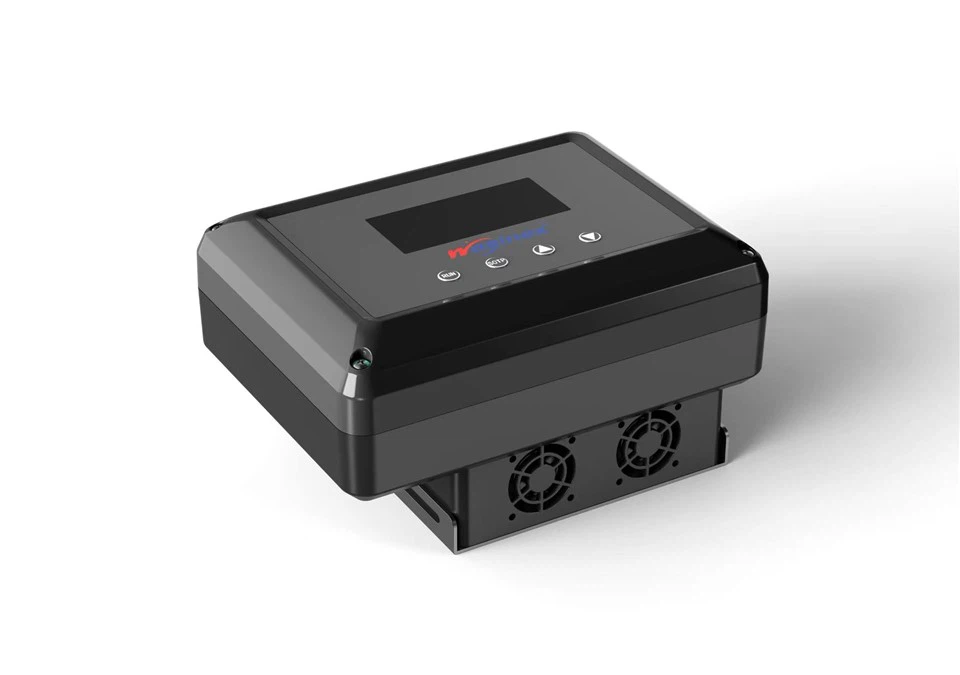
In an off - grid solar system, you rely entirely on the energy stored in your batteries. If you have a large house with lots of appliances, you'll need a high - capacity battery bank. By connecting multiple batteries, you can store enough energy during the day to power your home at night. You can find more information about inverters suitable for such systems on our website, like the Timing And Speed Control Pump Inverters.
Backup Power Systems
For businesses or homes that need a reliable backup power source, connecting multiple batteries to an inverter can ensure that you have enough power during a power outage. You can keep essential appliances like refrigerators, lights, and communication devices running for an extended period. Our Pump Inverter With Float Switch can be a great addition to such a system.
Electric Vehicles
Some electric vehicles use multiple batteries connected in series or parallel to achieve the desired voltage and capacity. Although this is a bit more complex and usually done by manufacturers, the principle is the same. Our New LCD Three - phase Inverter might be suitable for certain EV - related applications.
Conclusion
So, to sum it up, yes, you can connect multiple batteries to an inverter, but you need to do it right. Consider the type of connection, battery compatibility, inverter rating, charging system, and safety. If you're unsure about anything, it's always a good idea to consult a professional.
If you're looking for high - quality inverters for your battery connection needs, we're here to help. Whether you're setting up an off - grid solar system, a backup power system, or working on an EV project, we've got the right inverters for you. Don't hesitate to reach out to us for more information and to start a procurement discussion. We're eager to work with you and provide the best solutions for your power needs.
References
- Battery Technology Handbook, various editions
- Inverter Manufacturer's Manuals
- Electrical Safety Standards and Guidelines