

Liquid level sensors are essential devices in various industries, used to monitor and control the level of liquids in tanks, containers, and other vessels. They play a crucial role in ensuring the efficient and safe operation of many processes. As a liquid level sensor supplier, I often encounter customers who are confused about the differences between single - point and multi - point liquid level sensors. In this blog, I will delve into the details of these two types of sensors, highlighting their features, applications, and advantages.
Single - Point Liquid Level Sensors
Single - point liquid level sensors are designed to detect the presence or absence of liquid at a specific point. They are typically used to trigger an alarm or control a process when the liquid level reaches a predefined level.
How They Work
There are several types of single - point liquid level sensors, each with its own working principle. For example, float - type single - point sensors use a float that rises or falls with the liquid level. When the float reaches a certain position, it activates a switch, which can be used to send a signal. Another common type is the optical single - point sensor. These sensors work by emitting light into the liquid. If the liquid is present at the sensing point, the light is refracted or absorbed in a different way compared to when the liquid is absent, and this change is detected by a photodetector.
Applications
Single - point liquid level sensors are widely used in simple liquid level monitoring applications. In domestic water tanks, a single - point sensor can be used to detect when the water level is low, triggering a pump to refill the tank. In industrial settings, they can be used in chemical storage tanks to prevent over - filling or to indicate when it is time to refill. For example, in a small - scale chemical mixing process, a single - point sensor can be placed at the maximum allowable liquid level to ensure that the tank does not overflow.

Advantages
One of the main advantages of single - point liquid level sensors is their simplicity. They are relatively easy to install and operate, and they are often more cost - effective than multi - point sensors. Their straightforward design also means that they have fewer components that can fail, resulting in lower maintenance requirements.
Multi - Point Liquid Level Sensors
Multi - point liquid level sensors, on the other hand, are capable of detecting the liquid level at multiple points simultaneously. This provides a more detailed picture of the liquid level profile in a tank or container.
How They Work
Multi - point sensors can use a variety of technologies. Some multi - point sensors use a series of electrodes placed at different heights in the liquid. When the liquid contacts an electrode, an electrical circuit is completed, and the sensor can determine which electrodes are in contact with the liquid, thus indicating the liquid level at multiple points. Another type of multi - point sensor is the ultrasonic multi - point sensor. It emits ultrasonic waves and measures the time it takes for the waves to bounce back from the liquid surface at different positions. By analyzing these time differences, the sensor can calculate the liquid level at multiple points.
Applications
Multi - point liquid level sensors are used in applications where a more accurate and detailed liquid level measurement is required. In large industrial storage tanks, such as those used for oil or gas storage, multi - point sensors can provide information about the liquid level at different locations in the tank, helping to detect any uneven distribution of the liquid. In water treatment plants, multi - point sensors can be used to monitor the level of water in different stages of the treatment process, ensuring that the treatment is carried out efficiently.
Advantages
The main advantage of multi - point liquid level sensors is their high accuracy and the ability to provide detailed level information. This can be crucial in applications where precise control of the liquid level is necessary. For example, in a pharmaceutical manufacturing process, accurate liquid level measurement is essential to ensure the correct dosage of ingredients. Multi - point sensors can also be used for inventory management, as they can provide real - time information about the volume of liquid in a tank.
Key Differences
Measurement Capability
The most obvious difference between single - point and multi - point liquid level sensors is their measurement capability. Single - point sensors can only provide information about the presence or absence of liquid at a single point, while multi - point sensors can measure the liquid level at multiple points, giving a more comprehensive view of the liquid level in a tank.
Complexity and Cost
Single - point sensors are generally simpler in design and construction, which makes them less expensive. They are suitable for applications where a basic level of liquid level monitoring is sufficient. Multi - point sensors, however, are more complex and usually more expensive. Their higher cost is due to the additional components and technology required to measure the liquid level at multiple points.
Installation and Maintenance
Single - point sensors are easier to install, as they only need to be placed at a single location. Maintenance is also relatively straightforward, as there are fewer components to check. Multi - point sensors, on the other hand, require more careful installation to ensure that all the sensing points are correctly positioned. Maintenance can also be more involved, as there are more components that need to be inspected and calibrated.
Related Products
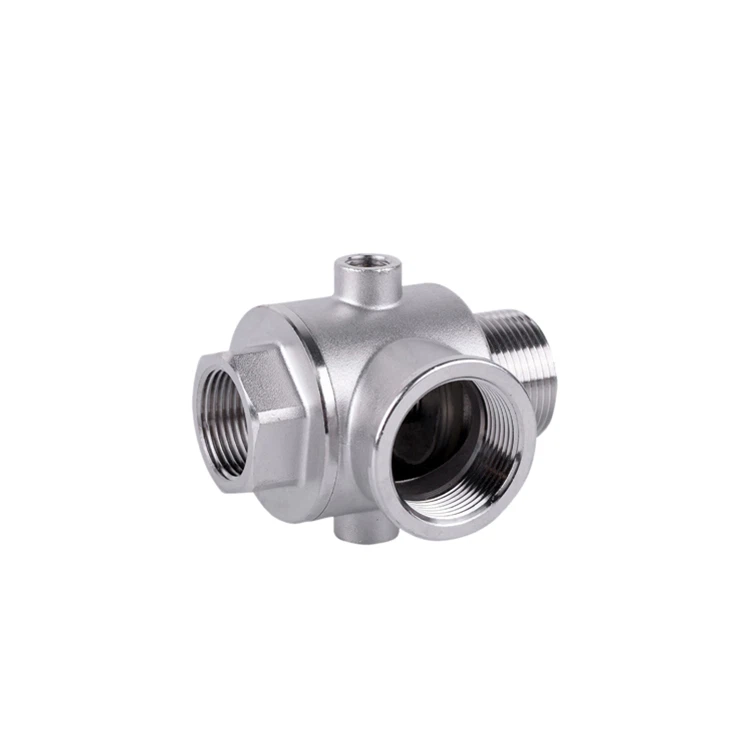
As a liquid level sensor supplier, we also offer a range of related products that can complement the use of liquid level sensors. For example, Pressure Sensor can be used in conjunction with liquid level sensors to monitor the pressure in a tank, which can provide additional information about the liquid volume. The Stainless Steel Five - way Check Valve is a reliable component that can be used to control the flow of liquid in a system, ensuring that the liquid level is maintained within the desired range. Our Digital Display Pump Controller can be used to control the operation of pumps based on the information provided by the liquid level sensors, allowing for more efficient and automated liquid level management.
Conclusion
In conclusion, the choice between a single - point and a multi - point liquid level sensor depends on the specific requirements of the application. If a simple and cost - effective solution for basic liquid level monitoring is needed, a single - point sensor may be the best choice. However, if a more accurate and detailed measurement of the liquid level is required, a multi - point sensor is likely to be more suitable.
As a liquid level sensor supplier, we have the expertise and experience to help you select the right sensor for your application. Whether you need a single - point sensor for a small - scale project or a multi - point sensor for a large - scale industrial application, we can provide you with high - quality products and professional advice. If you are interested in our liquid level sensors or related products, please contact us for more information and to discuss your procurement needs.
References
- Smith, J. (2018). Liquid Level Sensing Technologies: A Comprehensive Guide. Industrial Sensors Journal, 15(2), 45 - 60.
- Johnson, M. (2019). Advances in Multi - Point Liquid Level Measurement. Sensor Technology Review, 22(3), 78 - 92.
- Brown, K. (2020). Single - Point Liquid Level Sensors: Applications and Limitations. Journal of Process Control, 30, 123 - 135.