

As a supplier of Pressure Control Switches, I am often asked about the signal outputs of these essential devices. Understanding the signal outputs of a Pressure Control Switch is crucial for various applications, especially in industries where precise pressure management is required. In this blog post, I will delve into the different types of signal outputs that Pressure Control Switches can provide and their significance in real - world scenarios.
1. Mechanical Contact Outputs
One of the most common signal outputs of a Pressure Control Switch is the mechanical contact output. These switches are designed with a set of electrical contacts that open or close based on the pressure level. When the pressure reaches a pre - set threshold, the contacts change their state.
There are two main types of mechanical contact arrangements: normally open (NO) and normally closed (NC). In a normally open contact configuration, the contacts are open when the pressure is below the setpoint. Once the pressure rises above the setpoint, the contacts close, allowing current to flow through the circuit. Conversely, in a normally closed contact configuration, the contacts are closed when the pressure is below the setpoint. When the pressure exceeds the setpoint, the contacts open, interrupting the current flow.
Mechanical contact outputs are widely used in simple control systems. For example, in a water pump system, a Pressure Control Switch with a mechanical contact output can be used to start or stop the pump. If the pressure in the water tank drops below a certain level, the switch with a NO contact will close, sending a signal to start the pump. Once the pressure reaches the desired level, the switch will open, stopping the pump. You can find more information about suitable switches for such applications on our Pressure Control Switch page.
2. Relay Outputs
Relay outputs are an extension of the mechanical contact concept. A relay is an electrically operated switch that can control a larger electrical load than the basic mechanical contacts of a Pressure Control Switch. When the Pressure Control Switch detects a change in pressure and reaches the setpoint, it activates the relay.
The advantage of relay outputs is their ability to handle higher currents and voltages. This makes them suitable for applications where the control signal needs to operate larger equipment or systems. For instance, in an industrial hydraulic system, a Pressure Control Switch with a relay output can be used to control the operation of large - scale valves. The switch can send a signal to the relay, which then controls the valve's opening and closing, regulating the flow of hydraulic fluid.
Relay outputs also provide electrical isolation between the control circuit and the load circuit. This isolation helps protect sensitive control components from electrical interference and damage that could be caused by the high - power load.
3. Analog Outputs
In addition to mechanical and relay outputs, some Pressure Control Switches offer analog outputs. An analog output is a continuous electrical signal that varies in proportion to the measured pressure. The most common types of analog outputs are 4 - 20 mA and 0 - 10 V.
The 4 - 20 mA output is widely used in industrial applications. The current signal of 4 mA typically represents the minimum pressure value, while 20 mA represents the maximum pressure value. This type of output is less susceptible to electrical interference compared to voltage - based outputs, especially over long cable runs.

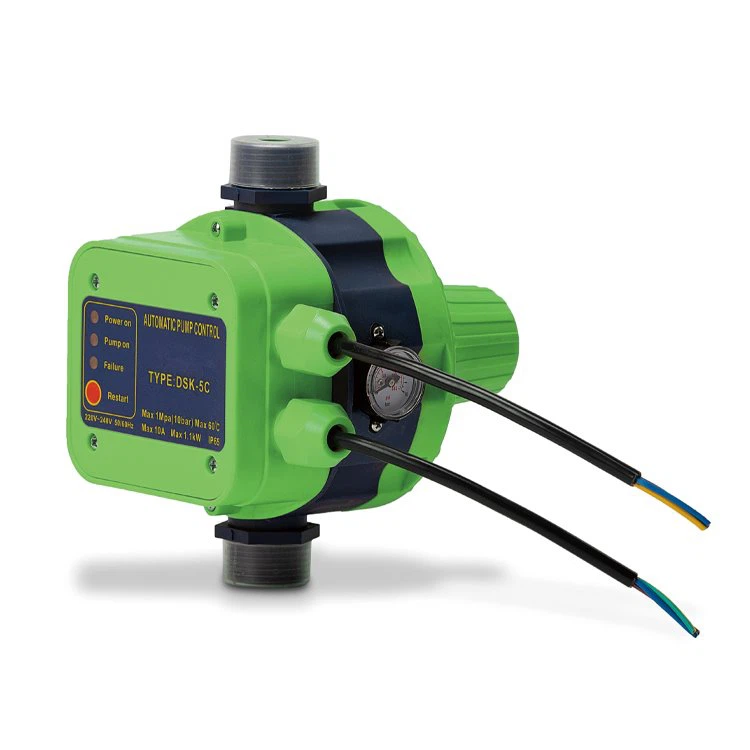
The 0 - 10 V output, on the other hand, is more commonly used in applications where the control system is designed to work with voltage signals. The voltage varies linearly with the pressure, with 0 V corresponding to the minimum pressure and 10 V corresponding to the maximum pressure.
Analog outputs are useful in applications where precise pressure measurement and control are required. For example, in a chemical processing plant, a Pressure Control Switch with an analog output can be used to provide real - time pressure data to a process control system. The system can then use this data to adjust various parameters, such as the flow rate of chemicals, to maintain optimal process conditions. You can explore our VLF - 512 Pressure Transmitter which may offer such analog output capabilities for more accurate pressure monitoring.
4. Digital Outputs
Digital outputs are becoming increasingly popular in modern Pressure Control Switches. A digital output provides a discrete signal, typically in the form of a high or low voltage level, indicating whether the pressure is above or below a certain setpoint.
Digital outputs are often used in applications where the control system is based on digital logic. For example, in a Programmable Logic Controller (PLC) - based system, a Pressure Control Switch with a digital output can send a simple on/off signal to the PLC. The PLC can then use this signal to execute a series of pre - programmed actions.
Digital outputs are also well - suited for communication with other digital devices, such as sensors and actuators. They can be easily integrated into a networked control system, allowing for remote monitoring and control of pressure - related processes.
5. Pulse Outputs
Pulse outputs are another type of signal output that some Pressure Control Switches can provide. A pulse output generates a series of electrical pulses, where the frequency or width of the pulses is proportional to the pressure.
Pulse outputs are commonly used in applications where the pressure needs to be measured and counted. For example, in a flow measurement system, a Pressure Control Switch with a pulse output can be used to measure the number of pressure pulses generated by the flow of a fluid. By counting these pulses, the system can calculate the volume or flow rate of the fluid.
Significance of Different Signal Outputs in Various Industries
- Water and Wastewater Industry: In water supply systems, mechanical contact outputs are often used to control the operation of pumps and valves. For example, a Pump Electronic Pressure Switch with a mechanical contact output can ensure that the water pressure in a distribution network remains within a safe and efficient range. In wastewater treatment plants, analog outputs can be used to monitor the pressure in pipes and tanks, providing real - time data for process control.
- Oil and Gas Industry: The oil and gas industry requires high - precision pressure control. Relay outputs are commonly used to control large - scale equipment such as compressors and pipelines. Analog and digital outputs are used for continuous monitoring of pressure in wells and storage tanks, allowing for early detection of potential problems.
- Manufacturing Industry: In manufacturing processes, different signal outputs of Pressure Control Switches play crucial roles. Digital outputs can be integrated into automated production lines, while analog outputs can be used to fine - tune the pressure in hydraulic and pneumatic systems, ensuring the quality and consistency of products.
Conclusion
In conclusion, the signal outputs of a Pressure Control Switch are diverse and each type has its own unique advantages and applications. Whether it is the simple mechanical contact output for basic control, the relay output for handling larger loads, the analog output for precise measurement, the digital output for digital - based systems, or the pulse output for counting applications, these signal outputs are essential for ensuring the proper operation of various systems.
As a supplier of Pressure Control Switches, we offer a wide range of products with different signal outputs to meet the diverse needs of our customers. If you are looking for a Pressure Control Switch for your specific application, we encourage you to contact us for more information. Our team of experts can help you select the right product with the appropriate signal output to ensure the optimal performance of your system. We look forward to the opportunity to discuss your requirements and work together on your next project.
References
- Instrumentation and Control Engineering Handbook.
- Industrial Automation and Control Textbooks.
- Technical Documentation from Pressure Control Switch Manufacturers.