

Mechanical switches are essential components in various industries, known for their reliability and durability. As a supplier of mechanical switches, I've encountered numerous common problems that users face. Understanding these issues can help in effective troubleshooting and prevention, ensuring the smooth operation of equipment.
1. Contact Wear and Oxidation
One of the most prevalent problems with mechanical switches is contact wear. Every time a switch is actuated, the contacts make and break the electrical circuit. Over time, this repeated action causes physical wear on the contact surfaces. The constant friction can lead to pitting and deformation, which increases the contact resistance. As the resistance rises, more heat is generated at the contact points. Excessive heat can further damage the contacts and may even cause the switch to fail.
Oxidation is another issue closely related to contact wear. When the contacts are exposed to air, they react with oxygen to form oxide layers. These oxide layers are poor conductors of electricity, which also increases the contact resistance. In environments with high humidity or corrosive gases, the oxidation process can be accelerated. For example, in industrial settings where there are chemicals in the air, the switches are more likely to suffer from oxidation.
To mitigate these problems, it's important to choose switches with high - quality contact materials. Gold - plated contacts are often a good choice as gold is highly resistant to oxidation. Regular maintenance, such as cleaning the contacts with a suitable contact cleaner, can also extend the lifespan of the switch. Our Adjustable Pump Mechanical Switch uses high - quality contact materials to minimize wear and oxidation, ensuring long - term reliable operation.
2. Mechanical Fatigue
Mechanical switches rely on moving parts to function. The repeated movement of these parts, such as springs and levers, can lead to mechanical fatigue. Fatigue occurs when the material is subjected to cyclic loading over time. Eventually, small cracks can form in the material, which may propagate and cause the part to break.
For instance, in a push - button switch, the spring that returns the button to its original position is constantly compressed and released. After a large number of cycles, the spring may lose its elasticity or even break. This can result in the switch not functioning properly, either failing to make contact when pressed or not returning to its off position.
To address mechanical fatigue, it's crucial to select switches with proper mechanical design and high - quality materials. Our engineering team carefully designs the mechanical components of our switches to withstand a large number of cycles. We also conduct extensive testing to ensure that the switches meet high - quality standards.
3. Environmental Sensitivity
Mechanical switches can be highly sensitive to the environment in which they operate. Dust, dirt, and moisture are common environmental factors that can cause problems. Dust and dirt can accumulate inside the switch, interfering with the movement of the mechanical parts. This can lead to sticking or inconsistent operation of the switch.
Moisture is an even more serious problem. Water can cause corrosion of the metal components, short - circuit the electrical contacts, and damage the insulation. In outdoor applications or in environments with high humidity, such as bathrooms or industrial kitchens, moisture - resistant switches are essential.
Our Pump Electronic Pressure Switch is designed to be highly resistant to environmental factors. It has a sealed housing that protects the internal components from dust, dirt, and moisture, ensuring reliable operation even in harsh conditions.

4. Inconsistent Actuation Force
The actuation force of a mechanical switch is the amount of force required to operate the switch. Inconsistent actuation force can be a significant problem, especially in applications where precise control is needed. This inconsistency can be caused by several factors, including manufacturing variations, wear and tear, and environmental factors.

During the manufacturing process, slight variations in the dimensions of the components can lead to differences in the actuation force. As the switch is used, wear on the mechanical parts can also change the actuation force. For example, if the contacts become worn, the force required to close the circuit may increase.
Environmental factors such as temperature and humidity can also affect the actuation force. In cold temperatures, the materials may become more rigid, increasing the actuation force. In high - humidity environments, moisture can cause swelling of the components, which may also change the actuation force.
To ensure consistent actuation force, we implement strict quality control measures during the manufacturing process. We also test each switch to ensure that the actuation force meets the specified requirements.
5. Electrical Noise
Electrical noise is another common problem associated with mechanical switches. When the contacts of a switch make or break the electrical circuit, they can generate electrical noise. This noise can be in the form of voltage spikes or electromagnetic interference (EMI).
Voltage spikes can damage sensitive electronic components connected to the switch. EMI can interfere with the operation of nearby electronic devices, causing malfunctions or errors. In applications where high - precision electronics are used, such as in medical equipment or aerospace systems, electrical noise can be a serious issue.
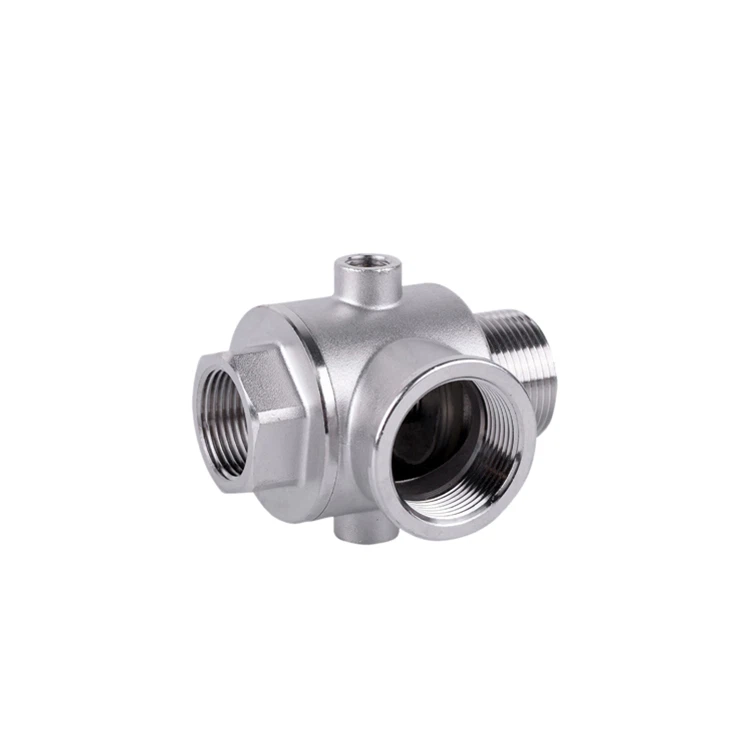
To reduce electrical noise, we use techniques such as contact debouncing and shielding. Contact debouncing is a method of filtering out the short - term fluctuations that occur when the contacts are making or breaking the circuit. Shielding is used to prevent the EMI from radiating out from the switch. Our Stainless Steel Five - way Check Valve is designed to minimize electrical noise, ensuring stable operation in sensitive electronic systems.
6. Compatibility Issues
In some cases, compatibility issues can arise when using mechanical switches. This can occur when the switch is not compatible with the electrical system it is connected to. For example, if the voltage or current ratings of the switch are not suitable for the circuit, it can lead to overheating, damage to the switch, or even electrical hazards.
Compatibility issues can also occur when the switch is used in a system with different communication protocols. In modern industrial automation systems, many devices need to communicate with each other using specific protocols. If the switch does not support the required protocol, it may not be able to integrate properly into the system.
As a supplier, we provide detailed technical specifications for all our switches to ensure that customers can choose the right switch for their applications. We also offer technical support to help customers with compatibility issues.
Conclusion
Mechanical switches are reliable components, but they are not without their problems. Contact wear and oxidation, mechanical fatigue, environmental sensitivity, inconsistent actuation force, electrical noise, and compatibility issues are some of the common problems that users may encounter. As a leading supplier of mechanical switches, we are committed to providing high - quality products that minimize these problems. Our switches are designed with advanced technology and high - quality materials to ensure long - term reliability and performance.
If you are facing any issues with mechanical switches or are looking to purchase high - quality switches for your application, we invite you to contact us for a detailed discussion. Our team of experts will be happy to assist you in finding the best solution for your needs.
References
- "Electrical Contacts: Principles and Applications" by R. Holm
- "Mechanical Design Handbook" by Joseph Edward Shigley
- "Environmental Effects on Electrical and Electronic Components" by D. A. Jones